
Can a Hybrid Car Run on Gas Only? The Mechanical Reality of Dead Batteries
No, a full hybrid vehicle (such as a Toyota Prius, Camry Hybrid, or Ford Escape Hybrid) cannot run on gas only if the high-voltage traction battery is dead, failed, or removed. The internal combustion engine has no conventional 12V starter motor or mechanical alternator; it relies entirely on high-voltage Motor-Generator 1 (MG1) to spin the engine to 1,000 RPM to start. Furthermore, the electronic continuously variable transmission (e-CVT) requires electrical counter-torque from the battery to transmit engine power to the drive wheels. Without high-voltage battery power, the vehicle will not start or move.
On this page (6 sections)
- The Mechanical Architecture: Why Hybrids Are Inseparable Powertrains
- The Planetary Power Split Trap: The No-Torque Reality
- Degraded Battery vs Dead Battery: What Actually Happens
- Real Diagnostic Case Study: P0A80 Code & Immobilized Vehicle
- Manufacturer Engineering Specifications & NHTSA Safety Standards
- Frequently Asked Questions
Key takeaways
- No Conventional Starter Motor: Full hybrids do not have a 12V starter. The gas engine is cranked exclusively by high-voltage Motor-Generator 1 (MG1) drawing 200V+ from the hybrid traction battery.
- No Mechanical Alternator: Modern hybrids lack belt-driven alternators. The 12-volt accessory electrical system is sustained entirely by a high-voltage DC-to-DC converter powered by the traction battery.
- Planetary Gear e-CVT Mechanical Interlock: The gas engine connects to the planet carrier of a planetary gearset. Without electrical reaction torque on the sun gear (MG1), the gas engine will simply spin freely without sending torque to the wheels.
- Limp-Home Mode vs Dead Battery: A degraded hybrid battery with reduced capacity can limp along on gas with degraded MPG, but a fully dead or disconnected pack completely immobilizes the vehicle.
- PHEVs Are the Exception: Plug-in hybrids (PHEVs) can operate on gasoline after the EV battery range is depleted, but only because they retain an active high-voltage hybrid reserve buffer.
The Mechanical Architecture: Why Hybrids Are Inseparable Powertrains
A common misconception among automotive owners is that a hybrid car consists of two independent powertrains: a standard gasoline car with an electric motor tacked on as an optional helper. Many drivers believe that if the high-voltage battery pack dies, the car will simply operate as a standard gas-powered vehicle.
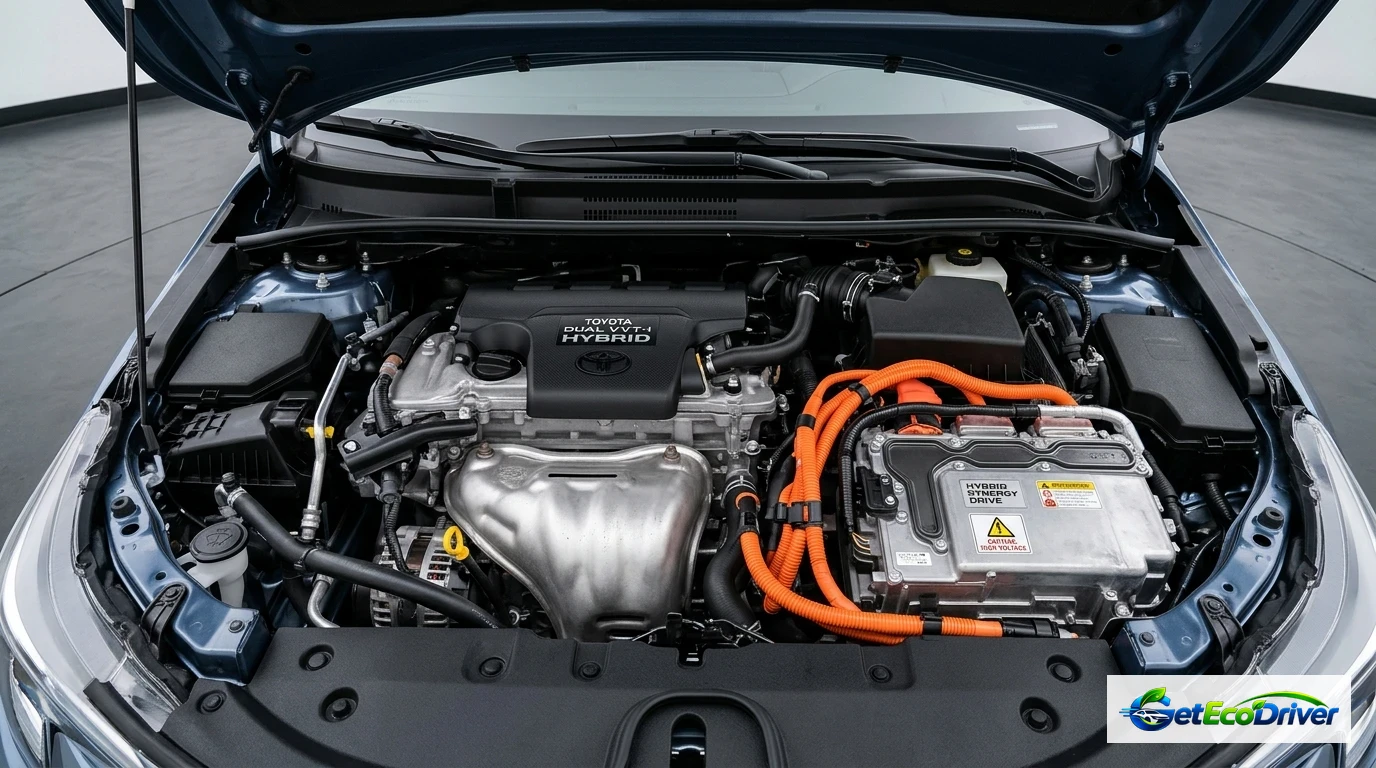
In full series-parallel hybrids (such as Toyota's Hybrid Synergy Drive, Ford's hybrid systems, and Honda's two-motor e:HEV), the gasoline engine and electric motor-generators are physically integrated through a planetary power-split device. One cannot function without the other.

| Automotive Component | Conventional Gasoline Vehicle | Full Hybrid Vehicle (e.g. Toyota / Ford) | Impact if Hybrid Battery Dies |
|---|---|---|---|
| Engine Starter | 12V Starter Motor & Solenoid | High-Voltage MG1 (200V - 650V) | Engine cannot crank or start |
| Electrical Generation | Belt-Driven Mechanical Alternator | High-Voltage DC-to-DC Converter | 12V battery dies in 15 minutes |
| Transmission Coupling | Torque Converter / Friction Clutch | Planetary Gear e-CVT | Zero torque transfer to wheels |
| Reverse Gear | Mechanical Idler Reverse Gear | Electric Motor (MG2) reversed | Vehicle has no reverse capability |
The Planetary Power Split Trap: The No-Torque Reality
In an e-CVT, the internal combustion engine is mechanically connected to the planet carrier, the wheels are connected to the outer ring gear, and the electric motor-generator (MG1) is connected to the center sun gear.
According to the laws of planetary gearing, torque cannot be transmitted from the planet carrier to the outer ring gear unless the center sun gear provides a resistance reaction force. In a functioning hybrid, the high-voltage battery and power inverter place an electromagnetic load on MG1, holding the sun gear steady so engine power is forced outwards to turn the wheels.

If the high-voltage battery is dead or disconnected, MG1 has zero electromagnetic resistance. When the gas engine spins, it simply spins the unresisted sun gear at high speed like an open differential. Zero torque reaches the drive wheels. The car cannot move an inch under its own power.
Degraded Battery vs Dead Battery: What Actually Happens
Understanding the 3 Stages of Battery Failure:
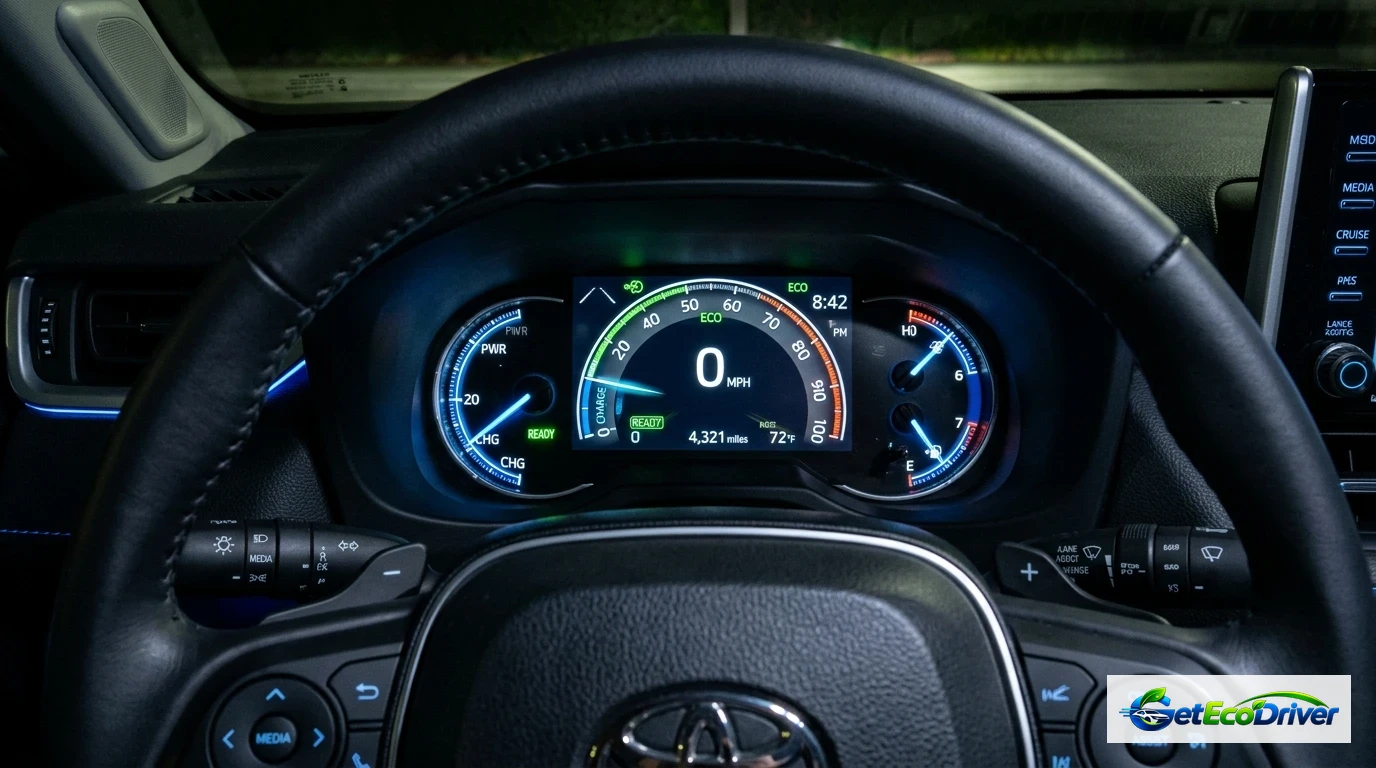
- Stage 1: Weak / Degraded Battery (Vehicle Still Runs): The battery has lost 30% to 50% capacity, setting code P0A80. The gas engine runs almost constantly to keep the weak pack charged, fuel economy drops from 50 MPG down to 32 MPG, but the car remains drivable.
- Stage 2: Limp-Home Mode (Restricted Operation): Cell voltage delta triggers ECU safe mode. Acceleration is severely sluggish, the instrument cluster illuminates warning lights, but the car can be driven off the road at low speed.
- Stage 3: Total Failure / Disconnection (Vehicle Immobilized): System Main Relays (SMR) open for safety. The "READY" indicator will not illuminate, the gas engine will not crank, and the vehicle must be towed.
Real Diagnostic Case Study: P0A80 Code & Immobilized Vehicle
To demonstrate what occurs when an owner attempts to operate a full hybrid with a failed traction battery, consider a 2014 Toyota Prius brought into our diagnostic lab displaying the illuminated "Check Hybrid System" warning and Diagnostic Trouble Code P0A80 (Replace Hybrid Battery Pack).
The owner attempted to continue driving solely on gasoline. Over a two-week period, the following mechanical breakdown sequence unfolded:
- Severe Fuel Economy Degradation: Because the weakened battery could no longer assist with low-speed takeoff torque, the 1.8-liter gas engine was forced to rev continuously at 3,200+ RPM. Fuel economy dropped from 48 MPG down to 27.4 MPG.
- DC-DC Converter Thermal Overload: Without adequate high-voltage buffer capacity, the vehicle's solid-state DC-DC inverter struggled to maintain 14.1 volts across the 12-volt accessory rail, causing power steering assist failure.
- Final Relay Lockout: On day 14, an internal battery block dropped below the 9.5-volt safe cutoff during startup. The hybrid ECU triggered master relay lockout (SMR open), preventing Motor-Generator 1 from cranking the engine. The vehicle became completely immobilized and required flatbed towing.
If your vehicle is exhibiting early warning symptoms of high-voltage battery fatigue, review our detailed guide on 7 Signs Your Hybrid Battery Is Dying, or examine plug-in hybrid longevity in PHEV Battery Degradation Explained.
Manufacturer Engineering Specifications & NHTSA Safety Standards
Hybrid high-voltage safety interlocks are governed by federal automotive safety mandates overseen by the National Highway Traffic Safety Administration (NHTSA). Under federal regulations, any loss of electrical isolation or critical cell voltage collapse must automatically disconnect high-voltage contactors to prevent thermal runaway and protect vehicle occupants from high-voltage DC hazards.
Frequently Asked Questions
Can I jump-start a hybrid with a dead high-voltage battery?
No. Jump-starting a hybrid only recharges the auxiliary 12-volt battery under the hood or in the trunk, which powers the computers and closes the relays. Jump cables cannot charge the 200V+ high-voltage traction battery. If the traction battery is dead, standard jump-starting will not start the vehicle.
Can a Plug-in Hybrid (PHEV) run on gas only?
Yes. A PHEV is designed to operate seamlessly as a standard hybrid once its plug-in electric range reaches 0 miles. However, it still requires its high-voltage battery pack to operate in hybrid mode; if the battery pack suffers catastrophic failure, the PHEV is also immobilized.
Can you delete or remove the hybrid battery to make the car gas-only?
No. Removing the hybrid battery eliminates the vehicle's engine starter, alternator, reverse gear, and transmission reaction torque. There is no commercially viable aftermarket conversion kit that can convert an e-CVT hybrid into a purely mechanical gas car.
How long can a hybrid sit unused before the traction battery dies?
A healthy hybrid traction battery can typically sit for 2 to 3 months without critical self-discharge. However, older batteries with degraded chemistry can experience self-discharge below the ECU starting threshold in as little as 3 to 6 weeks of non-use.